RCTiling Dublin
How Lighting Changes the Appearance of Tiles in Your Home
When homeowners choose tiles for a renovation project, most attention is given to colour, size, pattern, and material. While these factors are important, lighting often has just as much influence on the final appearance of tiled surfaces. A tile that looks perfect in a showroom can appear completely different once installed at home, simply because of the way light interacts with it.
Understanding how lighting affects tiles can help you make better design decisions and create spaces that feel brighter, warmer, larger, or more luxurious. Whether you are renovating a bathroom, kitchen, hallway, or living area, considering lighting alongside tile selection is essential.
The Relationship Between Light and Tile Surfaces
Tiles do not have a fixed appearance. Their colour, texture, and finish respond to changing light conditions throughout the day. Natural sunlight, warm artificial lighting, and cool LED lighting all influence how a tile looks to the human eye.
For example, a light grey tile may appear slightly blue under cool white lighting but look warmer and softer under warm LED lighting. The same tile can even appear different between morning and evening as daylight changes in intensity and direction.
This is why it is always recommended to view tile samples in the actual room where they will be installed whenever possible.
Natural Light Creates Dynamic Tile Effects
Natural light is one of the biggest factors affecting tile appearance. Rooms with large windows and strong sunlight often showcase tile colours more accurately and reveal subtle variations in tone and texture.
South-facing rooms typically receive more direct sunlight, making colours appear brighter and more vibrant. North-facing rooms tend to receive cooler, softer light, which can make certain tile colours appear darker or more muted.
As sunlight moves throughout the day, shadows and highlights shift across tiled surfaces. This movement can enhance textured tiles, creating depth and visual interest that may not be noticeable under artificial lighting alone.
Artificial Lighting Can Alter Tile Colour
Different types of artificial lighting produce different colour temperatures. These temperatures significantly influence how tiles are perceived.
Warm white lighting often creates a cosy atmosphere and can enhance beige, cream, brown, and natural stone-effect tiles. Cool white lighting provides a crisp, modern appearance and tends to complement grey, white, and contemporary porcelain tiles.
In bathrooms and kitchens, selecting the right lighting temperature is particularly important because these spaces rely heavily on artificial lighting during darker months.
Before making a final tile choice, it is worth viewing samples under the same type of lighting that will be used in the finished room.
Gloss Tiles Reflect More Light
Glossy tiles are highly reflective and can make rooms feel brighter and more spacious. They bounce both natural and artificial light around the room, increasing the sense of openness.
This makes gloss tiles a popular choice for smaller bathrooms, en-suites, and kitchens where maximising light is a priority.
However, because gloss surfaces reflect light strongly, they can also highlight fingerprints, water marks, and surface imperfections more easily than matt finishes.
Matt Tiles Offer a Softer Appearance
Matt tiles absorb more light and create a softer, more understated look. Rather than reflecting bright highlights, they provide a consistent appearance across the surface.
Many homeowners prefer matt finishes for modern interiors because they create a calm and sophisticated feel. They also reduce glare in rooms with strong sunlight or multiple light sources.
While matt tiles may not make a room feel quite as bright as gloss tiles, they often provide a more natural and elegant finish.
Textured Tiles Become More Dramatic with Lighting
Textured tiles are particularly sensitive to lighting conditions. Raised patterns, grooves, ridges, and three-dimensional surfaces create shadows that add depth and character.
Feature walls in bathrooms often use textured tiles because carefully positioned lighting can emphasise their design. Wall-mounted lights, recessed spotlights, and concealed LED strips can all create striking visual effects.
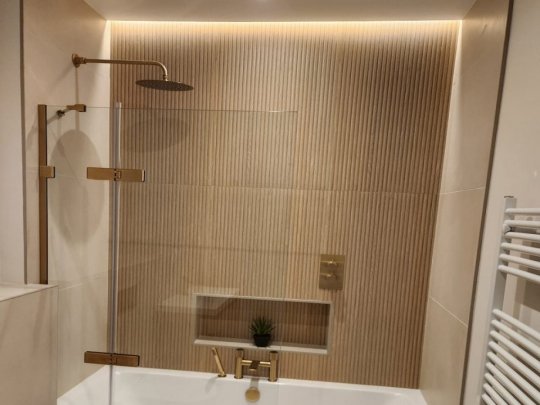
In the attached bathroom design, the warm LED lighting positioned along the ceiling highlights the vertical texture of the feature wall, enhancing the sense of depth and creating a luxurious atmosphere.
Lighting Can Influence the Perceived Size of a Room
Lighting and tile selection work together to affect how large or small a room feels. Light-coloured tiles combined with good lighting can make compact spaces appear significantly bigger.
Reflective surfaces and well-distributed lighting reduce dark corners and create a more open environment. On the other hand, darker tiles paired with limited lighting can make rooms feel smaller and more enclosed.
This does not mean dark tiles should be avoided. When balanced with appropriate lighting, they can create a stylish and dramatic interior.
Tips for Choosing Tiles with Lighting in Mind
When selecting tiles for your home, consider both natural and artificial light sources before making a final decision. View samples at different times of day, assess how they appear under your chosen lighting fixtures, and think about the atmosphere you want to create.
If your goal is brightness and openness, lighter shades and reflective finishes may be the best choice. If you prefer warmth, texture, and a more relaxing environment, matt or textured tiles paired with carefully planned lighting can deliver outstanding results.
Conclusion
Lighting has a major impact on how tiles look and feel within a space. Colour, texture, finish, and even room size can appear dramatically different depending on the type and direction of light available. By considering lighting from the beginning of your project, you can ensure your chosen tiles perform exactly as expected and create the atmosphere you want in your home.
Ready to Transform Your Home?
At RCTiling Dublin, we help homeowners choose and install tiles that look exceptional in every lighting condition. Whether you're planning a bathroom renovation, kitchen upgrade, or complete home tiling project, our experienced team can guide you through every step. Contact RCTiling Dublin today for expert advice and a free consultation.