An Expert Tiler's Guide
Large vs. Small Tiles: Which is Right for Your Home?
Choosing the right tile is one of the biggest decisions you'll make in a renovation. Beyond colour and material, the size of the tile itself can completely transform a room. The "large format vs. small tile" debate is one we see every day. The truth is, both have fantastic benefits, but they create very different results in terms of style, maintenance, and installation. Here’s a professional tiler's breakdown to help you decide.
The Allure of Large Format Tiles
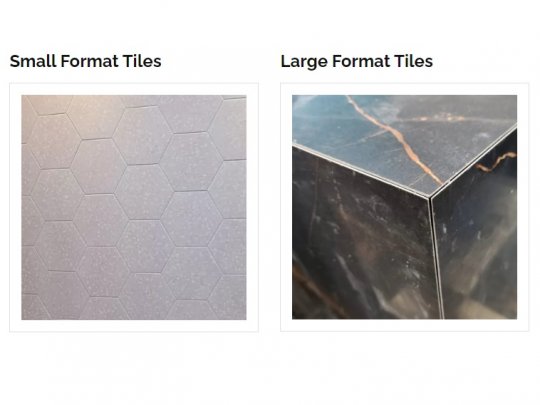
In recent years, large format tiles (LFTs) have become incredibly popular in Dublin homes, and for good reason. A "large" tile is generally considered any tile with at least one side 15 inches or longer. Many modern styles are now 24x24 inches or even larger.
The number one advantage is the illusion of space. With far fewer grout lines, a large tile creates a clean, seamless, and uninterrupted surface. This lack of visual clutter tricks the eye into seeing the room as larger and more open than it really is. This makes LFTs a perfect choice for small bathrooms, ensuites, or kitchens where you want to maximise the feeling of space.
Fewer grout lines also mean less cleaning. Grout is porous and can trap dirt, so having less of it makes maintenance significantly easier, keeping your floor or walls looking pristine for longer. This gives large tiles their signature sleek, modern, and minimalist aesthetic.
The Classic Charm of Small Tiles
Small tiles, like classic subway tiles, mosaics, or penny rounds, bring a completely different energy to a space: character. Where large tiles create a seamless canvas, small tiles add texture, detail, and a sense of craftsmanship.
Their main strength is versatility. You can't create a herringbone, basket-weave, or intricate mosaic pattern with a large tile. Small tiles allow for creative expression, turning a kitchen splashback or a bathroom floor into a unique feature. They are also better at conforming to curves or slightly uneven surfaces.
In functional terms, small tiles are the classic choice for shower floors. The grid of extra grout lines provides much-needed slip resistance, making them a safer option for wet areas.
Installation: The Professional Difference
This is where the tile size has the biggest impact. It might seem like laying a few large tiles would be quicker than laying hundreds of small ones, but that isn't always the case. Large format tiles demand an almost perfectly flat and level subfloor. Any small dip or bump can cause the tile to "lip" (sit unevenly) or, worse, crack under pressure after installation. They are heavy, difficult to cut precisely, and require special tools and expertise to set correctly.
Small tiles are more forgiving of a subfloor that isn't perfect and are easier to cut around obstacles like pipes and sockets. However, the installation is a different kind of challenge: it's a time-consuming, meticulous process to ensure all those grout lines are perfectly straight, even, and consistent.
So, Which Should You Choose?
Ask yourself these questions:
What is my style? If you love a modern, sleek, and minimalist look, and you want your room to feel more spacious, choose large tiles.
Am I adding character? If you want intricate patterns, a vintage feel, or a textured feature wall, small tiles are your best bet.
Where is it going? For a shower floor, we almost always recommend small mosaic tiles for grip. For a small bathroom's main walls, large tiles can work wonders to open up the space.
Ready to Start Your Project?
The final "wow" factor of any tile job—big or small—comes down to the quality of the installation. A perfectly laid tile floor is a thing of beauty. If you're in the Dublin area and have a project in mind, the expert team at RCTiling is here to help.
We can advise on the best tile for your space, ensure your subfloor is perfectly prepared, and deliver a flawless, professional finish that will last for years. Contact us today for a free, no-obligation quote!